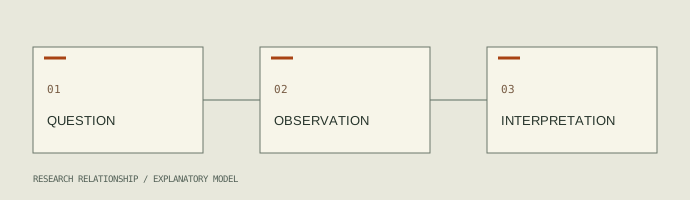
Choose what the experiment is meant to resolve
An experiment should answer a question that affects a decision. “Try the prototype” is too broad to establish whether the work is useful. A more focused question might ask whether a proposed arrangement allows a particular operation without an observed interference, under specified conditions.
The plan identifies the decision behind the question and what action may follow from different outcomes. If no plausible result would alter the decision, the planned work may need a different purpose. Exploratory work can still be valuable, but its purpose should be stated honestly.
Make the comparison and conditions explicit
A meaningful observation needs context. The plan describes the item or version under examination, the baseline or comparison, the conditions to maintain, and the conditions to vary. It also identifies which observations need measurement and which require a structured description.
Equipment, access, samples, and competence requirements should be checked with the people responsible for execution. Any hazards and necessary approvals must be handled through suitable safety arrangements before testing. A research plan alone cannot authorize an unsafe activity or substitute for specialist oversight.
Record enough to interpret a surprising result
The recording method should capture the conditions that make a result understandable later. This may include the item identifier, configuration, procedure deviations, observations, and notes about unexpected behavior. Raw observations and their interpretation should remain distinguishable.
The plan should describe how ambiguous results will be handled. A failed setup, an inconsistent reading, and a result that contradicts the concept are different events. Define when to stop, when a repeat is justified, and when the team needs to review the method before continuing.
Agree how the findings will be used
The output can be an experiment brief, a step-by-step procedure, an observation sheet, and an interpretation framework. The framework identifies the evidence that would support continuing, changing the concept, or conducting another investigation. Any numerical acceptance threshold needs an agreed basis.
The plan should also state what the experiment cannot establish. A small developmental exercise may reveal an issue without demonstrating long-term reliability or broad user acceptance. A clear limitation protects the next decision from treating a useful early observation as a finished validation claim.